
Embarking on a major home renovation or addition is one of the most significant emotional and financial investments you will ever make. It is not just about tearing down walls or picking out backsplash tiles; it is about reshaping the sanctuary where your life happens.
We have all heard the horror stories. The project that ran six months over schedule. The budget that ballooned out of control. The contractor who stopped showing up. What most homeowners do not realize is that these nightmares often start long before the first hammer swings. They begin with the very first decision you make: the project delivery method.
Most people dive into a renovation by asking “Who should I hire?” or “How much will this cost?” when the first question should actually be “Which process will I use?” The delivery method you choose determines how your budget is defined, who is accountable for mistakes, and ultimately, your stress level throughout the build.
This guide is here to help you navigate the two primary paths: design-build vs design-bid-build (or General Contractor). By understanding the mechanics of each, you can make a choice that protects your investment and your peace of mind.
Key Takeaways
- The Core Difference: Design-Bid-Build separates the design and construction contracts, potentially creating an adversarial relationship between the parties. Design-Build unifies them under one roof for shared accountability.
- Cost Certainty: Design-Build offers earlier budget clarity because construction costs are weighed during the design phase, not after.
- Risk Management: In the traditional model, homeowners often bear the risk of design errors. In Design-Build, the firm bears that risk.
- Efficiency: Integrated teams can overlap schedules, often resulting in faster project completion compared to the linear nature of bidding.
Quick Answer — Which Renovation Method Should You Choose?
If you are looking for the “Cole’s Notes” version, here is the breakdown. Your choice depends heavily on your risk tolerance and how much you want to act as the middleman between your designer and your builder.
Choose Design-Build If You Want
- One accountable team: You want a single phone number to call if something goes wrong, rather than having to mediate between an architect and a builder.
- Early budget clarity: You need to know if your design is affordable *before* you pay for completed blueprints.
- Fewer change orders: You prefer a process that checks constructability during design to minimize costly surprises later.
- Faster start + overlapping phases: You want to save time by allowing materials to be ordered or demolition to start while final finish details are still being confirmed.
- Less coordination stress: You are busy and want professionals to handle the technical coordination between structural, mechanical, and aesthetic elements.
Choose Design-Bid-Build If You Need
- Competitive tendering: You are required (or prefer) to bid the project out to multiple contractors to find the absolute lowest initial price.
- A fully completed design before pricing: You want every single detail drawn and specified by an independent architect before a builder ever looks at it.
- Separate control of design and construction: You want your architect to act as your agent, policing the builder’s work.
- Willingness to manage coordination and risk: You are comfortable stepping in to resolve disputes if the builder claims the drawings are missing information.
Also Read: Is a Design-Build Renovation Worth Paying More for in Toronto?
What Is Design-Bid-Build? (The Traditional Renovation Model)
This is the method most people are familiar with. It is the traditional triangular structure where you, the homeowner, sit at the top and hold separate contracts with a designer (or architect) and a general contractor. It is a linear, relay-race style process.
How Design-Bid-Build Works Step by Step
- Hire a designer or architect: You interview and hire a design professional to translate your vision into drawings.
- Complete drawings: You work through the design process until you have a full set of construction documents.
- Tender to multiple contractors: Once the design is “done,” you send the drawings to several general contractors and ask for prices.
- Choose the lowest (or best) bid: You review the quotes. Often, homeowners are shocked here because the quotes are higher than expected, leading to a redesign (and the need to re-pay the architect). If the price is right, you sign a contract.
- Construction begins: The builder starts work based on the drawings provided.
Where Design-Bid-Build Works Well
We do not want to paint this method as entirely obsolete. Design-bid-build residential construction has its place. It works effectively for simple projects where the scope is simple and unlikely to change, such as a direct “remove and replace” bathroom update. It also works for homeowners who are industry professionals themselves and have the time and expertise to manage the gap between the design and the build.
It also works well if you have an unlimited budget and a lot of time. If your goal is to get absolutely everything that you dream of regardless of the cost and the time it takes then you will not find much value in the Design-Build approach.
Also Read: 10 Biggest Mistakes in Renovations (and How to Avoid Them)
Common Challenges for Homeowners
The biggest pitfall of this model is the “knowledge gap.” Architects are brilliant at design, but they do not always have their finger on the pulse of current labour rates or material availability. They are also not aware of intricate details of construction methods and practices. It is relatively easy to design an element on paper that will be quite difficult to actually build in real life due to limitations the architect may not be aware of.
- Budget unknowns until late: You might spend months and thousands of dollars designing a dream addition, only to find out during the bidding phase that it costs 50% more than you planned.
- Design decisions without pricing feedback: You are making choices in a vacuum. You might pick a specific window placement that triggers a massive structural steel requirement, which a builder could have warned you about instantly.
- Higher likelihood of change orders: If the drawings conflict (e.g., a duct runs right through a beam), the builder stops work and asks for more money to fix it. This is a “change order.”
- Split responsibility when problems arise: This is the classic finger-pointing scenario. The builder says, “The drawing was unclear.” The architect says, “The builder should have known better.” You are stuck in the middle, paying the bill to solve it.
What Is Design-Build? (Integrated Renovation Delivery)
Think of this as the “master builder” approach returned to the modern age. The design-build renovation process unifies the two sides of the coin. You hire one firm that is responsible for both designing and building the project.
How Design-Build Works Step by Step
- One contract: You sign a single agreement with the design-build firm.
- One team: Architects, interior designers, and construction managers sit at the same table from the very first meeting.
- Design, pricing, and construction aligned from day one: As the design evolves, the construction team provides live feedback on cost and constructability. The budget is built alongside the blueprints, not after.
The Single Point of Responsibility Advantage
This is the breakthrough for risk management. In a design-build vs. traditional renovation comparison, the design-build entity assumes a single point of responsibility.
- Who owns design errors? The design-build firm does. If they designed it, they are responsible for ensuring it can be built. They cannot charge you extra for a mistake in their own drawings.
- Who manages consultants? The firm handles the structural engineers, mechanical designers, and surveyors.
- Who controls the budget vs. the scope? The team works together to balance your wish list with your wallet. If a design idea is too expensive, the construction manager flags it immediately so an alternative can be found.
Why Design-Build Fits Major Renovations Particularly Well
New construction is predictable. Renovations are not. When you open up the walls of a Toronto century home, you find surprises.
- Unknown site conditions: If we find rot behind the siding, the design and build teams solve it instantly without waiting for an external architect to issue a formal revision. Often, these things are discovered during the design phase.
- Phased decision-making: We can start demolition or framing while you are still finalizing the tile selection, speeding up the overall timeline.
- Allowances + selections: You get expert guidance on materials that fit your budget and the technical requirements of the space.
- Real-time cost feedback: You never have to wonder, “Can I afford this?” because cost monitoring is continuous.
Design-Build vs. Design-Bid-Build — Side-by-Side Comparison
When wondering which project delivery method is best, it helps to look at the specific metrics that matter to you: time, money, and stress.
Timeline & Speed
In the traditional model, steps are sequential. You cannot start building until the design is 100% finished and bid out.
In design-build, we can overlap phases. We can order long-lead items (like custom windows or cabinets) early in the design phase so they are ready when construction starts. This “fast-tracking” can shave weeks or even months off a project schedule.
Budget Transparency & Cost Control
Design-build vs design-bid-build cost structures differ significantly in when you know the final price.
In the bid-build model, you have a “low bid” initially, but it is often subject to change orders that drive the price up. In design-build, the price is developed iteratively. By the time construction starts, the quote is accurate because it is based on a design that has already been vetted for cost.
Fixed price vs cost-plus vs GMP explained clearly: Many design-build firms work on a fixed price or a Guaranteed Maximum Price (GMP). This shifts the risk of cost overruns from you to the builder.
Change Orders & Scope Creep
Why do design-build change orders happen less frequently? Because the people building the project helped design it. They spotted the tricky HVAC run or the complex roofline intersection months ago.
In the traditional model, a builder sees the plans for the first time during bidding. They might miss a detail or assume a cheaper method, leading to a “change order” once they are on site and realize the complexity.
Risk, Accountability & Disputes
If the tile arrives and it is the wrong shade, or the vanity doesn’t fit between the walls:
- Traditional: You have to figure out if the designer measured wrong or the builder built the wall in the wrong spot.
- Design-Build: You call your project manager. They fix it. You don’t care whose “fault” it is; you just want it resolved. That is the beauty of single accountability.
Homeowner Workload & Stress Level
How much free time do you have? In the traditional method, you are the hub of the wheel. You forward emails between the architect and builder. You ensure the permit is picked up.
In a residential design-build firm, we manage the administrative burden. You focus on the fun parts: approving layouts, picking finishes, and watching your home transform.
What This Means for Renovations & Additions (Real-World Scenarios)
Let’s look at how this plays out in the messy reality of construction.
Renovating Older Homes
Toronto is full of beautiful, old, quirky houses. When renovating older homes, you invariably run into structural surprises. Maybe the previous owner removed a load-bearing wall incorrectly, or the knob-and-tube wiring is still active.
In a design-build environment, when we open a wall and find a surprise, the designer and carpenter are on the same radio channel. We can engineer a solution, price it, and get approval often within hours, keeping the project moving.
Additions & Major Remodels
For additions & major remodels, logistics are key. If you are living at home during the work, the schedule must be tight. The coordination between the foundation crew, the framers, and the roofers needs to be seamless to ensure your home isn’t left exposed to the weather. An integrated team manages this choreography far better than disparate contractors who have never worked together.
Selections, Allowances & Long-Lead Items
Have you heard about the 26-week lead times for custom appliances? In a traditional model, you might not order these until construction starts, which can lead to massive delays. A design-build renovation Toronto / GTA firm will identify these long-lead items during the design phase and order them early, storing them if necessary, so your project does not stall waiting for a fridge.
Decision Matrix — Which Method Fits Your Project?
Still on the fence? Use this matrix to guide your decision.
Design-Build Is Usually Best If
- Scope may evolve: You have a vision but are open to professional suggestions on how to achieve it.
- Budget control matters more than lowest bid: You want to design *to* a budget, rather than getting a price shock later.
- You value collaboration over tendering: You believe a team working together produces a better result than strangers working apart.
- You want fewer surprises: You prefer a thorough front-end investigation.
Design-Bid-Build May Work If
- Design is fully complete: You have a stamped, sealed set of drawings sitting on your desk right now.
- Scope is unlikely to change: the project is straightforward.
- You’re comfortable managing risk: You have construction experience and time to supervise.
- Competitive bidding is required, perhaps for a government grant or insurance claim that mandates three bids.
Also Read: Renovation Trends That Stand the Test of Time: What’s Worth the Investment?
How to Choose the Right Firm (Regardless of Method)
Whether you choose design-build home renovation or the traditional route, the quality of the company matters most.
Questions Every Homeowner Should Ask
- How is pricing structured? Is it fixed, cost-plus, or an estimate?
- How are allowances handled? Are the allowances for finishes realistic, or are they low-balled to make the quote look cheaper?
- What’s the change order process? How are extra costs communicated and approved?
- Who manages permits and inspections? Does the firm handle the bureaucracy?
- How often will we communicate? Will there be a weekly site meeting? An app?
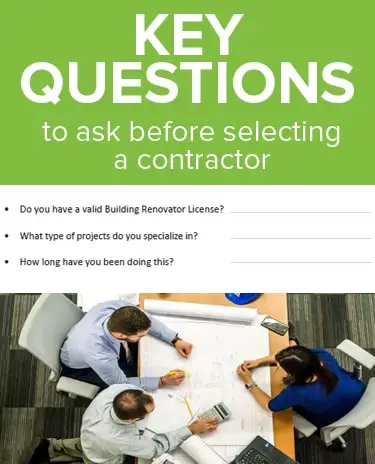
You Might Also Like – Questions to ask before selecting a contractor
Red Flags to Watch For
- Vague scopes: A one-page quote for a whole-home renovation is a disaster waiting to happen.
- No preconstruction phase: If a builder says they can start tomorrow without planning, run.
- Unrealistically low pricing: If one bid is 30% lower than the others, they have likely missed something (or are planning to make it up in change orders).
- No documented process: If they cannot show you a roadmap of how they work, they are winging it.
Why Many Homeowners Choose a Design-Build Firm Like SOSNA
We believe that the renovation experience should be as high-quality as the finished home. That is why we have dedicated ourselves to the design-build model.
Integrated Design + Construction
We do not just build; we create. By aligning our designers and craftsmen from the concept stage, we ensure that every line drawn on paper is practical, buildable, and beautiful.
Transparent Budgeting & Preconstruction
We hate financial surprises as much as you do. Our process involves deep feasibility checks and realistic pricing early on. We respect your investment by designing solutions that fit your financial comfort zone.
Proven Renovation Process
We don’t rely on luck. We rely on a system. From our dedicated project management to our rigorous quality control and warranty, every step is defined. We treat your home with the care it deserves.
Final Takeaway — Choose the Process That Reduces Risk, Not Just Cost
At the end of the day, the difference between design-build vs design-bid-build comes down to where you want to spend your energy.
The traditional path offers the illusion of the lowest price through bidding, but often trades that for higher risk, slower timelines, and the stress of being the middleman.
The design-build path offers a unified team, a guaranteed price before construction starts, and a smoother, faster journey. It costs a bit more in planning upfront to save you a fortune in mistakes and stress down the road.
If you do not have an unlimited budget, if you value peace of mind, accountability, and a team that is 100% on your side, design-build is the smarter choice for your home.
Ready to start your journey?
Book a renovation consultation with us today to discuss your vision.
Or, if you want to learn more about how we work, take a moment to explore Sosna’s Design-Build Process and see the difference for yourself.
Author: Camila Tan
835 Views