

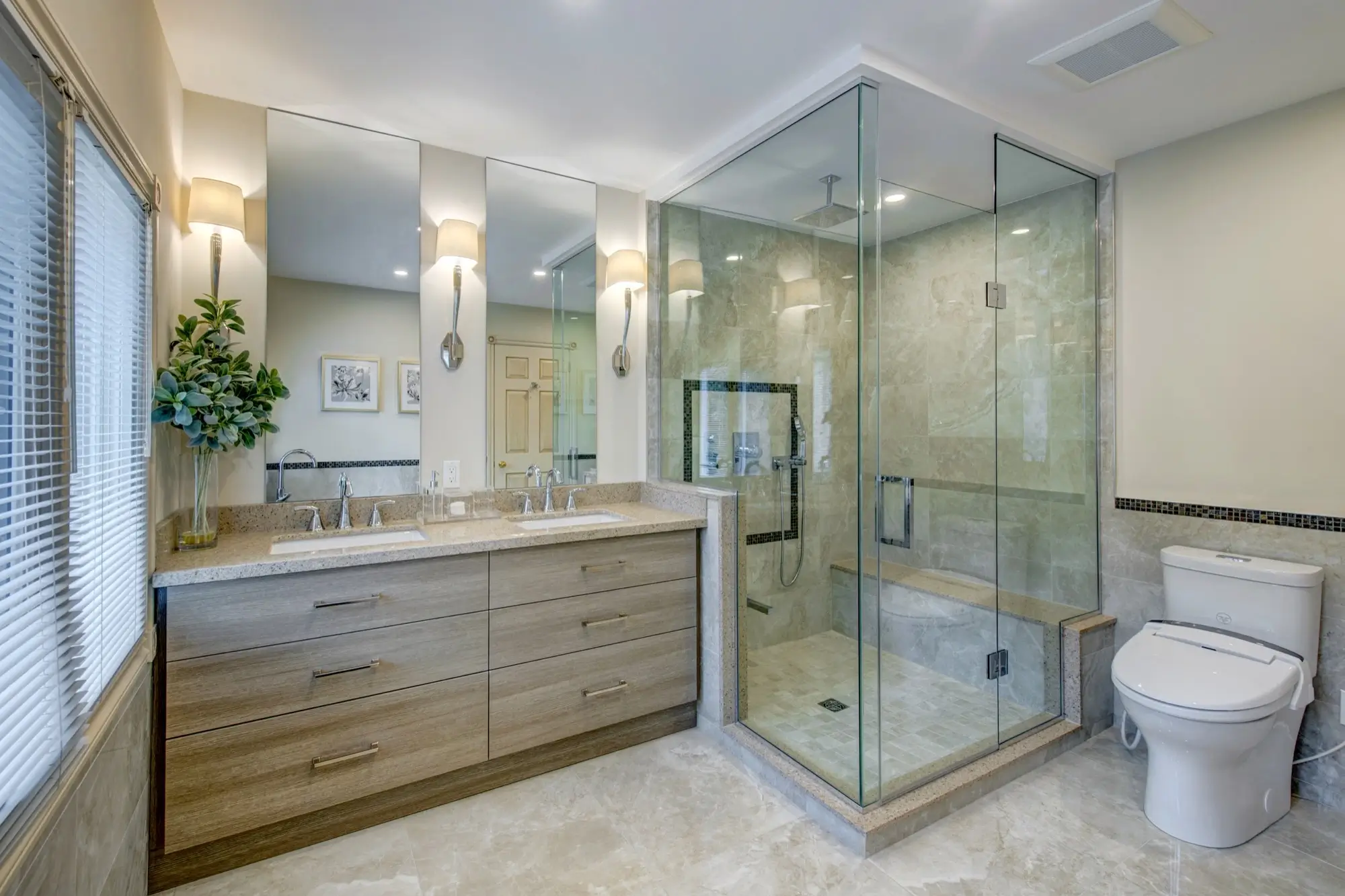
Bathroom renovations are among the most disruptive home upgrades you can undertake as a homeowner. Your home is your personal sanctuary, and losing access to a vital room like that can easily upset your entire daily routine. You might be picturing stressful mornings trying to share a single, cramped powder room with your entire family, or worrying about a thick layer of construction dust in your living space and furniture. Homeowners often underestimate how many stages are involved in turning an outdated, frustrating washroom into a functional, relaxing oasis.
There is a common misconception that a “small bathroom = quick renovation.” We hear this often, but the reality is quite different. Even the most compact spaces require the exact same sequence of skilled trades, drying times, and municipal inspections as a massive, luxury primary ensuite. In fact, a small bathroom makes things even worse because trades can’t work simultaneously. The fear of a project dragging on for months is absolutely valid, especially if you’ve heard horror stories from neighbours or friends. We want to take the mystery out of the process. This guide gives you a clear, expert breakdown of real timelines so you know exactly what to expect from your bathroom renovation timeline Toronto. By understanding each phase, you can plan your life accordingly and look forward to your beautiful new space with peace of mind instead of anxiety.
Key Takeaways
- Realistic Scheduling: Expect a typical bathroom renovation to take between 6 to 10 weeks, largely depending on whether you are simply updating surfaces or making complex structural changes.
- The Importance of Preparation: Finalizing your design and ordering all materials before demolition begins is the fastest way to renovate a bathroom without unnecessary delays.
- Avoiding Common Pitfalls: Working with a unified team helps you sidestep the most common bathroom renovation delays reasons, such as uncoordinated contractors and unexpected material backorders.
- Protecting Your Peace: Knowing the exact bathroom renovation schedule helps you manage your household routine, greatly minimizing the stress of living in a temporary construction zone.
How Long Does a Bathroom Renovation Take in Toronto?
When you decide it is finally time to fix that leaking shower or expand your cramped vanity, the first question is usually about the schedule. A typical total timeline for a professional bathroom renovation ranges from 6 to 10 weeks. This timeframe includes both the planning and design phase as well as the active construction breakdown in your home.
The range width shifts significantly when comparing a simple vs. a complex renovation. A straightforward cosmetic update, where your plumbing fixtures remain in their original locations, will obviously be much faster than a complex remodel that involves tearing down walls, reinforcing floor joists, or relocating water lines. Complex changes require rigorous engineering and specialized labour, which all adds up.
So, for those asking “How long does a bathroom renovation take?” the direct answer is that most standard washroom renovations in the Greater Toronto Area require about 2 to 3 weeks for planning, followed by 3 to 4 weeks of active construction. If your project involves moving plumbing or significant structural alterations, expect the bathroom remodel timeline to extend to 10 weeks or more. Setting realistic expectations from day one is the best way to prevent the disappointment of a project that feels like it is dragging on forever.
We know that it might be tempting to go with the contractor who promised you a shorter timeline, but in the bathroom, more than any other room in the house, cutting corners for speed can cause you immense long-term issues that you definitely don’t want or need.
Full Bathroom Renovation Timeline Breakdown (Step-by-Step)
To truly understand how long a bathroom renovation takes from start to finish, it’s helpful to look closely at the individual steps involved. This detailed bathroom renovation process timeline will help you understand the journey ahead and why each phase is critical to ensuring your new space is safe, beautiful, and built to last.
Planning & Design (1–3 weeks)
The journey always begins with an initial consultation. If any contractor gives you a price without even looking at your space, run. This is an opportunity for you to share your frustrations with your current space. Perhaps the layout is entirely dysfunctional, or you are embarrassed for guests to see the outdated tiles. Layout planning follows, where our professionals map out the most efficient use of your square footage to solve those specific problems. Finally, we always secure your full design approval to ensure that every single detail matches your vision before any hammers swing. Getting the details right on paper means you’ll avoid stressful (and often costly) last-minute decisions later.
Material Selection & Ordering (1–2 weeks)
Selecting your new fixtures, tiles, vanity, and lighting should feel exciting, not like an overwhelming chore. However, the sheer volume of choices can cause decision fatigue, we’ve seen it happen many times. If you’ve been at a home improvement store, and looked just at sink faucets, there’s enough to make your head swim. Professional guidance helps narrow down options, because, in addition to making decisions, material lead times and availability can also heavily impact the schedule during this phase. Ordering your selections early prevents your project from stalling. Waiting on a delayed custom vanity or a backordered specialty tile can bring your entire bathroom renovation duration to a standstill.
Permits & Approvals (if required)
Many homeowners are unaware of exactly when permits are needed in Toronto. As a rule of thumb, if you’re making structural changes, expanding a window, or significantly altering the plumbing and electrical systems, you’ll legally need municipal approvals. This administrative step has a direct impact on your project start time, because city approvals take patience, and factoring this into your early planning ensures you are not caught off guard by processing delays.
Demolition Phase (2–5 days)
No matter what the shiny TV shows often make you believe, the demolition phase is often the loudest and messiest part of the process, which is a major worry for many families. It involves removing old fixtures, crumbling tiles, and damaged drywall. Preparing the space for construction is essential to address water damage, mould, or outdated wiring behind the walls. Proper site isolation and dust protection during this phase are critical to keep the rest of your home clean and livable.
Construction Phase (2–4 weeks)
This is the core of your construction timeline. It begins with the plumbing rough-in, where new pipes are securely installed behind the walls. Next, electrical work is completed to ensure that your lighting, exhaust fans, and outlets comply with current safety codes. Waterproofing is one of the most critical steps in a bathroom, helping protect your home from future leaks that could damage ceilings below. Following this, the tile installation begins, which needs precision and adequate curing times for mortar and grout. Finally, we bring the room together by installing the vanity and fixtures, turning the site back into a recognizable, functioning washroom.
Final Finishing & Inspection (3–7 days)
The final week is dedicated to painting and sealing, which protects your new surfaces from daily moisture. We make final touch-ups to address any minor imperfections, ensuring a flawless result you can be proud of. Before we leave, we conduct a comprehensive quality inspection, verifying that every element functions perfectly so you can enjoy your brand-new bathroom.
What Factors Affect Bathroom Renovation Timelines?
Every historic or modern home in Toronto has its own unique quirks, and they all come with variables that will dictate your specific schedule. The size of the bathroom plays a lesser role, but the overall scope of work matters far more. Structural changes, such as removing a dividing wall to expand the room, require extensive labour and additional time. Plumbing or electrical relocation also adds days to the schedule, as these tasks must be performed by licensed specialists and require municipal inspections to ensure code compliance.
Your choice of finishes also influences the pace. Choosing custom vs standard materials can extend lead times. A standard bathtub may be available for pickup today, while a custom glass shower enclosure must be precisely measured and manufactured after tiling is fully finished to ensure a tight fit. Permit requirements are another variable, as city processing times can fluctuate widely by season. Finally, contractor coordination efficiency is a massive factor. If the independent professionals working on your home are not communicating perfectly, days can easily be lost waiting for the next trade to arrive, which is why SOSNA’s design-build model, where all trades are under one roof, can save you a lot of stress and waiting time.
If you want to learn about how long an entire house renovation takes, have a look at our “Full House Renovation Timeline Guide.”
Why Bathroom Renovations Get Delayed
It is highly frustrating when a project stalls, leaving you wondering, “Why do bathroom renovations take so long?” Material backorders are among the most frequent culprits, especially when items are selected too late in the process. Change orders during construction also cause major disruptions. Deciding to change a tile pattern or move a light fixture after the materials have been installed will always push your completion date backward and increase your costs.
If municipal inspectors are fully booked, it could be days or weeks before an inspection can take place, and during that time, all work has to pause. Furthermore, poor project planning is a significant issue. Hiring multiple uncoordinated trades often leads to a disjointed renovation schedule. When you are left to act as the project manager, a delayed electrician means the drywall installer has to reschedule, creating a domino effect that leaves your family sharing a single washroom for far longer than anticipated.
Small Bathroom vs Full Bathroom Renovation Timeline
It is helpful to compare a small bathroom renovation timeline with a much larger project. A small cosmetic remodel in which your vanity, toilet, and shower remain in their current locations typically takes 2 to 3 weeks. This involves replacing the surface materials, updating the fixtures, and applying a fresh coat of paint.
A full renovation, which involves stripping the room entirely down to the studs and installing completely new systems, ranges from 6 to 10 weeks. If your project includes structural changes, such as fixing significant water damage in an older home or expanding the room’s footprint, expect the timeline to reach 8 to 12+ weeks. Looking at real-world examples for clarity: refreshing a main-floor powder room before hosting an event is a quick process, while completely reconfiguring a second-floor family washroom to accommodate a growing household requires much more planning and coordination.
How to Speed Up Your Bathroom Renovation
You naturally want your home back to normal as quickly as possible. The fastest way to renovate a bathroom is not by rushing the skilled trades, but by perfecting your preparation. Finalize the design before construction begins so you don’t waste time second-guessing choices while your walls are open. Select in-stock materials whenever possible to eliminate the stress of shipping delays.
Avoid mid-project changes entirely. The “while you’re here” moment is one of the potentially most disruptive words you can say during a renovation. Once the plan is set, trust the process to keep the momentum going. Work with a design-build firm to ensure that the professionals designing your space are in constant, fluid communication with the team building it. Proper pre-construction planning is the ultimate secret to a swift, successful project that finishes right on schedule.
Curious about how a bathroom renovation compares to your kitchen? Have a look at “How Long Does it Take to Renovate a Kitchen.”
Why a Design-Build Firm Improves Timelines
Managing a renovation on your own can quickly feel like taking on a second full-time job (and, in a way, it is). You’re left making stressful phone calls during your workday, trying to match up the schedules of various independent workers. Working with a design-build firm offers a single point of accountability. You’ll never have to mediate disputes between a designer and a carpenter because they operate as one unified team.
This structure guarantees better scheduling coordination from day one. Because the entire project is managed under one roof, you experience significantly fewer delays and change orders. You get a predictable project timeline and enjoy clear communication throughout the entire process with one point of contact, not ten. Instead of managing a chaotic job site and dealing with strangers coming and going at odd hours, you can relax knowing that a dedicated professional is handling every detail.
If you are ready to stop worrying about delays, get a clear timeline for your bathroom renovation with SOSNA.
Also Read: Do You Need a Permit for Bathroom Renovation Toronto
Bathroom Renovation Timeline FAQ
How long does a small bathroom renovation take?
A simple cosmetic update of a small bathroom generally takes 2 to 3 weeks. A complete gut and remodel of that same small space will take closer to 4 to 6 weeks, due to the necessary drying times for waterproofing and tile work.
Can a bathroom renovation be done in 2 weeks?
A 2-week timeline is only realistic for very light cosmetic updates, such as replacing a vanity, swapping out a toilet, and painting the walls. Any project requiring new tile, plumbing changes, or deep waterproofing will take longer.
What is the fastest part of a bathroom renovation?
The demolition phase is typically the fastest part of the process. Tearing out old materials and preparing the space usually takes just 2 to 5 days, depending on the size of the room.
Do permits delay bathroom renovations in Toronto?
Permits do not necessarily delay the physical construction, but the application and approval process can add several weeks to your initial planning phase. It is vital to apply for permits early, so your start date is not impacted.
What causes the biggest delays?
Material backorders and mid-project design changes are the most common reasons for bathroom renovation delays. Poor scheduling of independent trades is also a major factor that can stretch a project weeks beyond its intended completion date.
Navigating Your Bathroom Renovation Timeline With Confidence and Clarity
Bathroom renovation timelines depend heavily on the thoroughness of your planning and the quality of the execution. The anxiety of a project dragging on indefinitely is a common fear, but it doesn’t have to be your reality. Most delays are entirely preventable with proper design and expert contractor coordination. When every detail is fully mapped out before the first hammer swings, clear planning leads to predictable, stress-free renovations. You deserve to upgrade your home without the headaches of constant disruptions, messy job sites, and unexpected budget surprises.
If you’re planning a bathroom renovation in Toronto, working with an experienced design-build team can help ensure your project stays on schedule from start to finish.
Book a free renovation consultation with SOSNA today to find out how we can help your bathroom turn into an oasis.
340 Views