
An interior designer in Toronto helps plan and shape interior spaces so they look great and function well. Their job starts with understanding how you live, your tastes, and your budget, and then designing a space that fits all of that.
Interior designers are very creative people. They can envision the final result in their mind’s eye and are experts in clearances, dimensions, heights, and widths of various elements in your home to make the space functional and comfortable to use. They know the pros and cons of different fixtures and materials. What they may not know are the intricate construction details and methods that can dramatically influence a project’s cost and duration. Sometimes, they simply do not know much about construction costs.
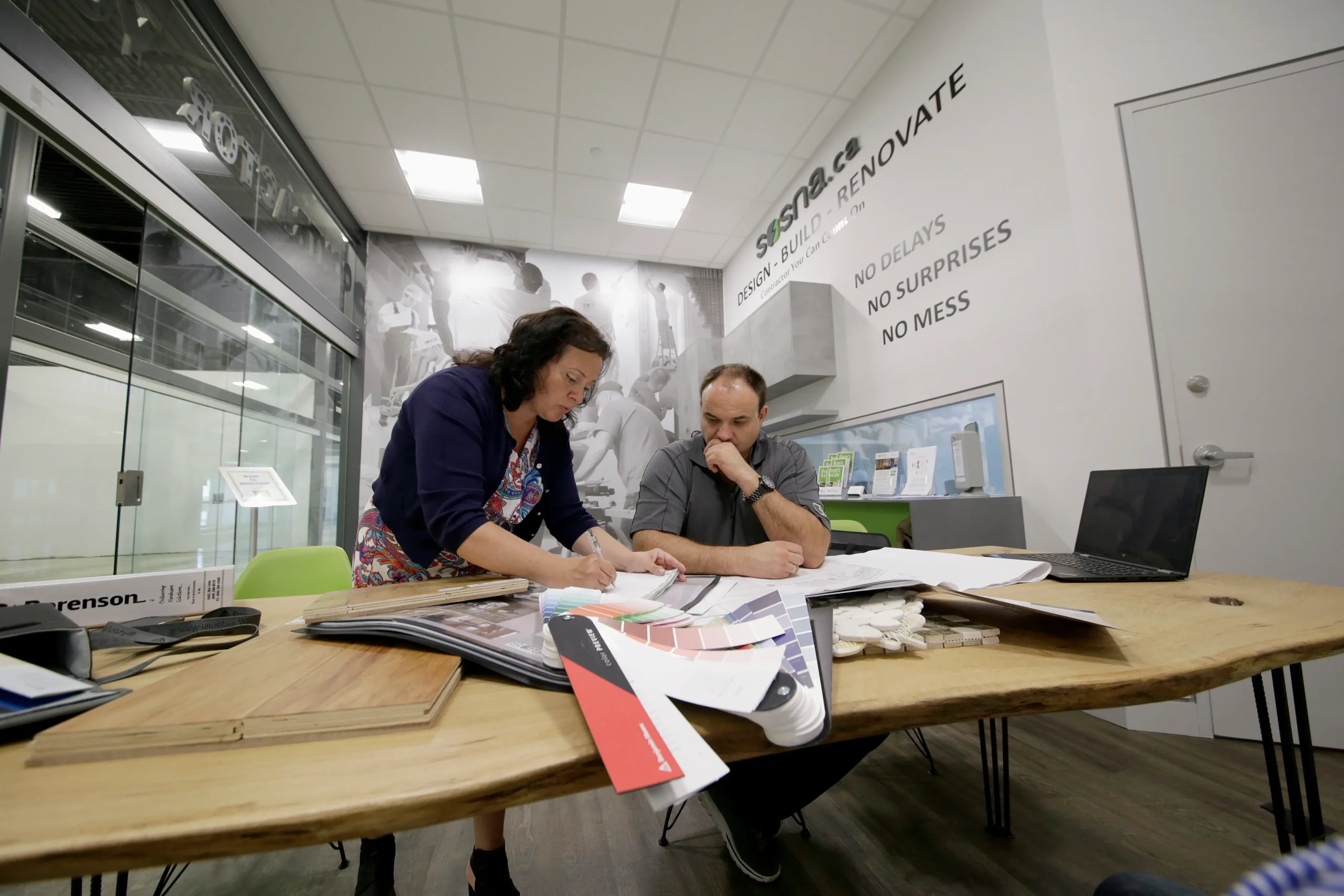
That is why it is in your best interest for your designer to collaborate closely with experienced tradespeople or work as part of a design-build team that incorporates all specialty trades, engineers, and estimators. An interior designer guides decision-making, reviews small details that could have a significant impact, and designs a space that fits the homeowner’s individual tastes and needs. This includes layout, colours, fixture and finish selections, detailed drawings of the proposed space, and 3D renderings, so homeowners can visualize the space before construction begins.
What Does an Interior Designer Do?
An interior designer’s responsibilities include improving how indoor spaces function and feel.
The process typically begins with client meetings to fully understand the homeowner’s needs, preferences, and budget. Measurements are taken, existing conditions of the space are noted, and initial ideas start to take shape.
From there, they create a custom design by selecting materials, fixtures, and finishes that suit their clients’ lifestyle and tastes. They consider factors such as durability, ease of maintenance, and staying on budget.
Design drawings are created to give the client a clear vision of what the proposed space will look like so they can make informed decisions before construction begins.
The Interior Design Process Step-by-Step
- Initial Consultation. You meet with the designer to talk about your goals, style, and budget.
- Site Measurement. The designer visits your home to take measurements and photos and to understand the space.
- Concept Development. They create a visual style for the space, including colours, textures, and overall ideas.
- Space Planning and Drawings. Layouts and plans showing how all the elements will work together.
- Materials, Fixtures, and Finishes Selection. This includes flooring, paint colours, lighting, cabinetry, and more. Everything gets documented and quoted to facilitate procurement.
- Design Documentation and Plans. Final drawings and documents are prepared for sharing with the production team, who will bring the design to reality. A building permit application is ready if necessary.
- Construction. Tradespeople execute the plans created by the designer. The more detailed the plans, the less room for mistakes. A good interior designer often oversees crucial elements during construction to ensure the client’s vision is implemented correctly.
- Pre-delivery inspection. The designer conducts a thorough walk-through of the finished space with the contractor to spot and address any discrepancies.
Types of Interior Designers
- Commercial Designers create offices, public spaces, and shops that look appealing and work well for customers and businesses.
- Healthcare Designers plan hospitals and clinics to be safe and easy to navigate.
- Hospitality Designers design hotel rooms, restaurants, and lounges.
- Residential Interior Designers help homeowners design homes that feel personal and very comfortable.
- Set Designers build sets for movies, TV, and theater to match the story.
- Sustainable Designers use eco-friendly materials and modern energy-saving ideas to lower waste.
- Adaptive Designers are experts in creating spaces that allow comfortable aging in place.
Key Skills Every Interior Designer Needs
Interior design combines creativity with strong practical skills. Designers need good time and budget management, an understanding of building codes, and attention to detail. They also use technical tools such as floor plans and design software like AutoCAD, Revit, and 3Ds MAX.
Equally important are communication and collaboration skills. Designers need to listen carefully, explain ideas clearly, and work well with clients and contractors. Curiosity, flexibility, and kindness go a long way. The most significant trait a designer can have is curiosity. A good designer should be curious about you, learning how you live in your home now, your frustrations, and your aspirations.
Interior Designer vs. Interior Decorator – What’s the Difference?
Interior designers focus on how a space functions. They plan layouts, lighting, and flow, understand building codes, and can work on renovation or construction-related changes.
Interior decorators focus mainly on looks. They select furniture, fabrics, and décor but do not alter layouts or structural elements and do not require the same formal training.
Why Hire an Interior Designer?
Hiring an interior designer helps you avoid costly mistakes and saves time. Designers know how to balance aesthetics with practicality so your space works well in the long term. Because they do it every day, they know what works well and what does not. They can see potential issues homeowners may not be aware of.
Designers have deep knowledge of materials and fixtures, including their pros and cons. They have access to many suppliers that may not even deal with the general public. They are skilled at finding small, intricate elements that may not be expensive but make a significant impact overall.
They know how to collaborate with tradespeople to avoid delays, confusion, and misunderstandings that may lead to design changes, mistakes, and price creeps.
Let’s Get Started!
Thinking about improving your home? We have developed a unique, tried-and-tested Process that all Sosna’s interior designers follow to make the experience straightforward and fun. Do you need help with design and renovation? Contact us today to get started!
As a renovation contractor, we provide a wide range of services, including a kitchen reno, bathroom reno, basement reno, home extension, and condo reno.
Frequently Asked Questions
What Qualifications Do You Need to Be an Interior Designer?
How Much Do Interior Designers Charge?
Do Interior Designers Work With Architects?
What’s the Difference Between Modern and Traditional Interior Design Styles?
Is Hiring an Interior Designer Worth It?
Author: Rosie Rooke
1432 Views