
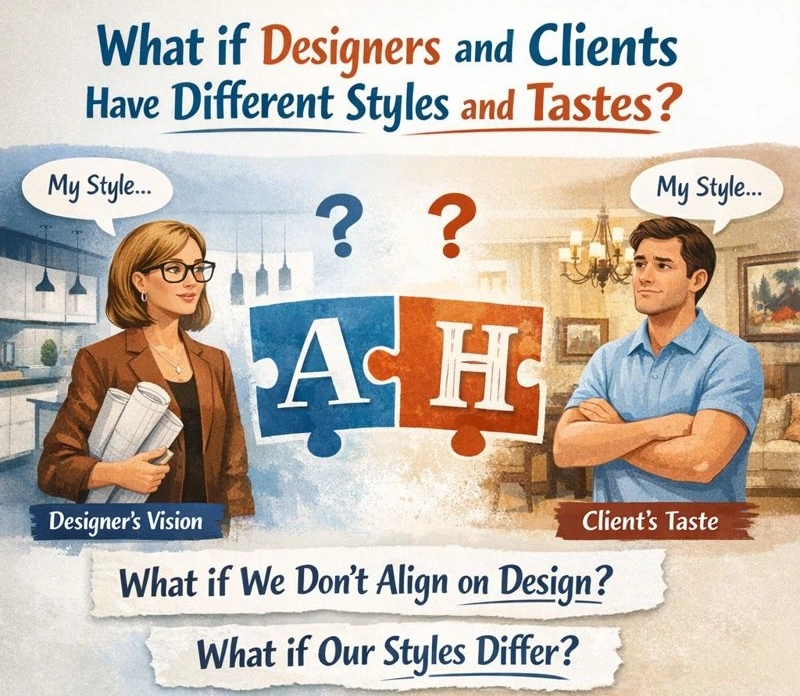
What If Designers and Clients Have Different Styles and Tastes?
As a Sosna Designer, one of the most common concerns clients have when starting a home renovation in Toronto comes down to this simple question:
“What if my Designer’s style and tastes are different from mine?”
It’s a fair concern because design is personal. Whether it’s a kitchen renovation in Toronto, a bathroom renovation, a home addition or basement renovation, the final result should reflect you, not the Designer. At the same time, as your Designer, I bring my creative lens, experience, and professional judgment to the table. So what happens when our styles and tastes don’t perfectly align?
The good news is this: having different styles doesn’t have to be a problem. In fact, when handled properly, it can actually lead to a stronger, more thoughtful design outcome.
Understanding the Designer’s Role
A common misconception is that hiring a Designer means adopting their personal style. Many clients ask, what is the role of an interior designer?
While I have a portfolio that reflects certain aesthetics, my primary responsibility is to interpret your vision and create a space that works for your unique needs.
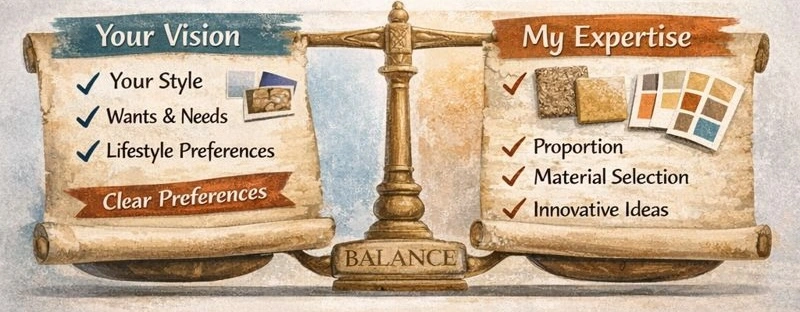
As your Designer, I listen first. I ask questions about how you live, what you’re drawn to, what you dislike, and what matters to you in your space. My job is to translate those insights into a cohesive, functional, and beautiful design – while carefully considering technical constraints, budget, timelines, and long-term value.
That said, being a professional designer allows me to see opportunities in proportions, materials, and combinations that you may not initially consider. The magic often happens in the balance between your preferences and my expertise.
Why Differences in Taste Are Normal
It is important to acknowledge that differences in taste are completely normal – and even expected.
I have worked with a wide range of Clients, each with unique lifestyles, cultural backgrounds, and personal histories. No two Clients are alike, no two spaces should be the same, and I don’t expect them to.
Sometimes, these differences are subtle – you may prefer warmer tones, while I may lean toward a cooler palette. Other times, they’re more pronounced: modern versus traditional, minimal versus layered, bold versus understated.
These differences don’t signal incompatibility. They simply highlight the importance of communication, trust, and collaboration in any interior design project.
The Importance of Clear Communication
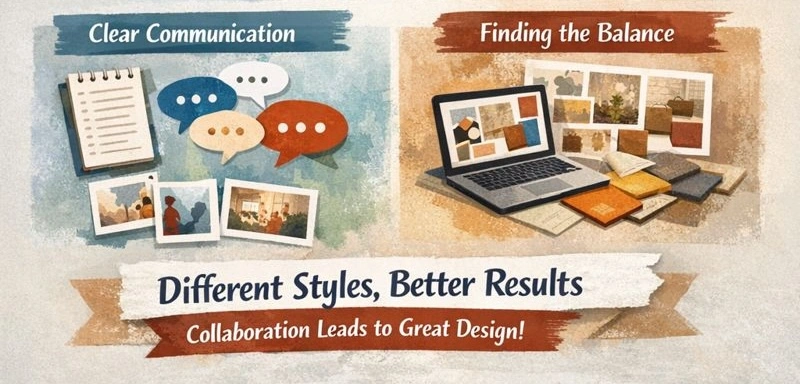
When our styles differ, communication becomes the most critical tool – and it begins early, during our First Design Meeting.
I make every effort to ensure that you feel comfortable expressing not only what you like, but also what you don’t like – and why.
Sharing reference images, inspirational photos, or even spaces you’ve visited and loved (or disliked) can be incredibly helpful. The goal isn’t to replicate an image exactly, but to understand the underlying elements that truly resonate with you.
In return, I clearly explain my recommendations. I may suggest something outside your comfort zone and share reasoning behind it – whether it’s related to functionality, durability, proportion, or overall cohesion. And it’s always okay for you to say no, without any offense taken on my part.
This is where our open dialogue builds confidence on both sides and helps prevent misunderstandings later in the process.
Truth Goes Both Ways
For our Design Phase to succeed, trust must be mutual.
You trust that I am genuinely advocating for your best interests – not simply pushing personal preferences – and in turn, I trust that you are open to professional guidance and willing to consider alternatives when appropriate.
This does not mean that you should say yes to everything I suggest – I’m human, and I can make mistakes. It simply means being open to discussion. Sometimes a recommendation may feel unfamiliar at first, but once it’s visualized through drawings, samples, or renderings, it often begins to make sense.
Likewise, I respect when you feel strongly about something. The final space belongs to you, not my portfolio.
Finding the Middle Ground
The best projects often live in the middle ground between your taste and my experience.
For example, you may love a traditional aesthetic, while I may lean toward a more contemporary approach. The solution might be a transitional design that blends classic elements with clean lines and updated materials. Or you may be drawn to bold colours throughout, while I may suggest balancing those choices with calmer backdrops to ensure longevity.
These compromises don’t dilute our design – they refine it.
As a skilled designer, my role is to edit, balance, and layer ideas so the final result feels intentional, cohesive, and harmonious rather than conflicting.
Using Our Design Process to Bridge Gaps
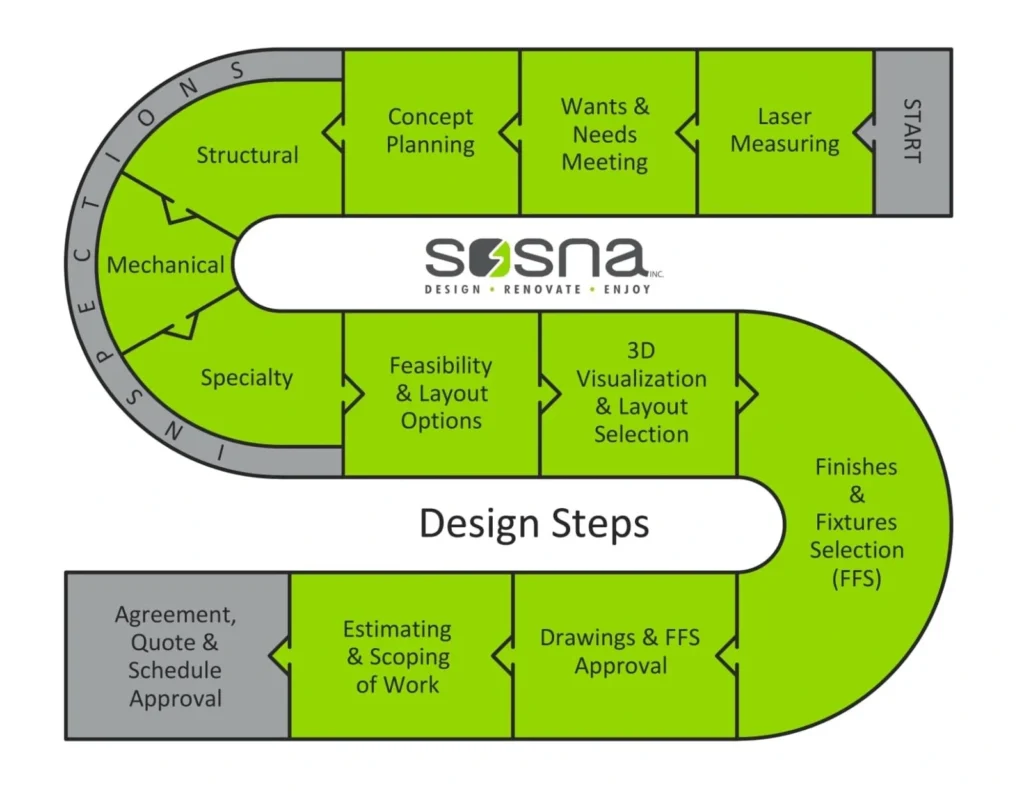
Our structured Design Process helps bridge stylistic differences while addressing technical constraints through our Home Inspections. Throughout our Design Process, I develop concept presentations, material samples, floor plans, elevations, and 3D renderings – allowing you to see and understand ideas before committing to them.
The visual communication reduces uncertainty and builds alignment. It helps you truly envision your space while leaving room for adjustments early on, when changes are easier and more cost-effective.
I will guide you through the available options – sharing the pros, cons, and alternatives – so you’re empowered to make informed, thoughtful decisions rather than emotional or rushed ones.
When It’s Truly Not a Fit
While most style differences can be resolved through open dialogue and collaboration, there are rare situations where you and I may simply not be the right fit and I am unable to deliver what you truly want. Likewise, you should always feel comfortable asking questions and seeking clarity early in the process. This isn’t a failure on either side; it’s a matter of alignment.
Working with your Designer goes far beyond aesthetics. It’s about how we communicate, how decisions are made, how feedback is exchanged, and how aligned we are in our expectations and values. When that alignment is strong, the Design Process feels collaborative, transparent, and enjoyable – setting the foundation for a successful project and a space that truly feels like home.
The End Goal: A Space That Feels Like You
At the end of the day, successful design isn’t about whose taste “wins”. It’s about creating a space that feels authentic, functional, and meaningful to you – while benefiting from professional insight and craftsmanship.
When we approach differences with curiosity rather than resistance, the result is often more layered, thoughtful, and timeless than either could achieve alone.
Different styles don’t have to divide the process. When handled with respect, transparency, and collaboration, they can become the very thing that elevates the final design – a space that truly feels like you.

Are You Ready To Fall Back In Love With Your Home?
Contact us today to get started on your own design and renovation journey!